Subscribe for clinical wellness insights, service updates, and exclusive offers — prescribed by GPs and delivered by AHPRA-registered nurses across Queensland & Northern Rivers NSW. Your Email Subscribe I agree and have read the FAQs.
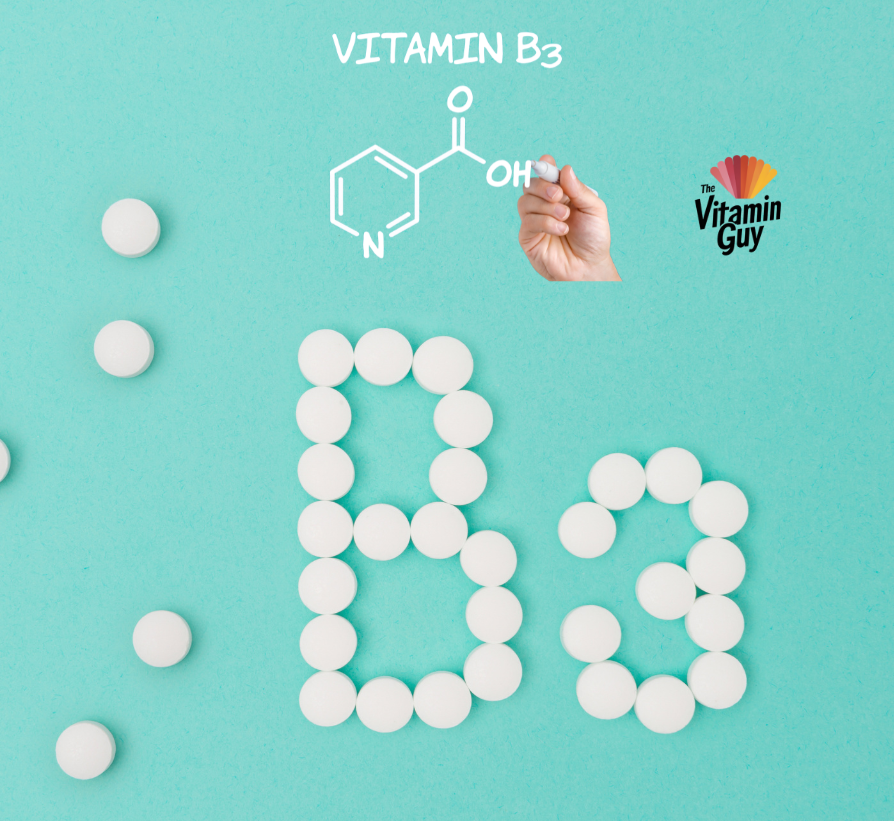
Vitamin B3 is a water-soluble vitamin needed to make NAD (nicotinamide adenine dinucleotide) and NADP (nicotinamide adenine dinucleotide phosphate), two coenzymes that sit at the centre of energy production, cell signalling, antioxidant defence, and DNA repair. It can come directly from food or be made in the body from the amino acid tryptophan.

Niacin is not just an “energy vitamin”. That description is true, but too small. B3 is built into coenzymes that help run mitochondrial energy transfer, fatty acid and cholesterol synthesis, antioxidant recycling, DNA repair systems, and intracellular signalling pathways that influence stress responses and metabolism.
This is why niacin shows up everywhere from glycolysis and the TCA cycle through to lipid synthesis, antioxidant support, and PARP-mediated DNA repair.
This is the part most pages butcher. “Niacin” is not one neat thing in practice. The form changes flushing potential, tolerability, and how the product is used in real life.
| Form | Main use | Key strengths | Main limitations | Flush risk |
|---|---|---|---|---|
| Nicotinic acid | Nutritional replacement and, in some clinical settings, prescription lipid management | Well-studied; directly supplies niacin activity | Can cause flushing, itching, GI upset, hypotension, and liver issues at high doses | High |
| Nicotinamide (niacinamide) | Nutritional replacement and general supplementation | Does not usually cause flushing; supports NAD-related vitamin function | Not used in the same way as nicotinic acid for lipid effects | Low |
| Inositol hexanicotinate | Marketed as “flush-free niacin” | Better tolerated by some users | Niacin bioavailability is lower and less consistent | Low |
| Nicotinamide riboside / NMN discussions | Marketed around NAD metabolism and healthy ageing | Theoretically interesting NAD precursors | Still not the same as proven broad clinical benefit; hype exceeds outcome data | Low |
For a broader B-vitamin context, see Vitamin B1, Vitamin B2, Vitamin B6, and Vitamin B12.
Preformed niacin is usually absorbed well from the small intestine. The tricky part is not ordinary absorption — it is the fact that food matrix, grain processing, protein status, and related B-vitamins can all change how much usable niacin the body actually ends up with.
Animal foods tend to be the heaviest hitters, but peanuts, legumes, grains, and fortified cereals also contribute. Protein-rich foods matter twice: they can supply preformed niacin and also provide tryptophan.
| Food | Why it matters | Vitamin B3 contribution pattern | Practical note |
|---|---|---|---|
| Chicken breast | One of the strongest routine food sources | High preformed niacin | Efficient way to raise intake without supplement-level dosing |
| Tuna / salmon / other fish | Dense source with good protein | Preformed niacin + tryptophan support | Useful when building higher-protein meal plans |
| Lean beef / liver | Strong niacin-containing protein foods | Preformed niacin + amino acid support | Liver is nutrient-dense but not for massive routine intake |
| Peanuts | Good non-animal contributor | Moderate niacin source | Useful snack option, but energy-dense |
| Whole grains & fortified cereals | Can materially support daily intake | Variable depending on product and fortification | Label quality matters |
| Legumes | Steady contributor in plant-heavy diets | Moderate niacin + protein support | Helpful in vegetarian eating patterns |
| Coffee | Minor contributor only | Small amount | Not a serious niacin strategy by itself |
Values vary with food type, preparation, and fortification. Use the Australian Food Composition Database for food-level lookups where exact numbers matter.
Flushing is mainly a nicotinic acid problem. Nicotinamide usually behaves differently.
Prescription niacin for dyslipidaemia exists in medicine, but this is not casual wellness territory. Once doses move into pharmacological range, you are dealing with a drug-like risk-benefit discussion, not a simple vitamin chat.
Most people do not need exotic niacin stacks. They need a decent diet, enough protein, and honest interpretation of symptoms. If someone is chasing mega-dose niacin because the internet sold them immortality, that is not evidence-based nutrition. That is marketing.
These answers are written for readability, search relevance, and compliance. They explain normal nutrient roles and general safety without making disease-treatment claims.
Explore more educational content in the Learn Hub and Water-Soluble Vitamins section. © Cellular Intelligence Australia. All rights reserved. No part of this content may be reproduced without permission.
The Learn Hub is here to make nutrition, hydration, and IV therapy information easier to understand. If you have a question about how mobile IV therapy works, whether a service area is covered, or what to read next, you’re welcome to get in touch.
Important: Learn Hub pages are general educational content only. They are not personal medical advice, and IV nutrient therapy is only considered after independent GP assessment and prescription where clinically appropriate.