Subscribe for clinical wellness insights, service updates, and exclusive offers — prescribed by GPs and delivered by AHPRA-registered nurses across Queensland & Northern Rivers NSW. Your Email Subscribe I agree and have read the FAQs.
Evidence-informed • Australian context • TGA-compliant educational content
Potassium (K⁺)
Potassium is a major electrolyte and the body’s main intracellular cation. It helps maintain normal nerve signalling, muscle contraction, fluid balance, and healthy cardiovascular function. This page explains what potassium does, where to get it from food, what low or high potassium may look like, and when medical review matters.
Plain-English summary: potassium helps your cells fire properly. It works closely with sodium and magnesium to support muscle function, nerve communication, heart rhythm, fluid balance, and blood pressure regulation. Food-first potassium intake is usually the safest approach. Supplements are not something to play with casually.
Mineral classMacro mineral • Electrolyte
Main locationInside cells
Core roleNerves, muscles, fluid balance
Main cautionKidney disease, medicines, heart rhythm risk
Potassium supports normal muscle contraction, nerve signalling, intracellular fluid balance, and healthy cardiovascular physiology.
🔑 Core function
Potassium helps generate the electrical gradients that let cells communicate. That matters most in nerves, muscles, and the heart. It also supports fluid distribution between the inside and outside of cells.
ElementPotassium (K)
Ionic formPotassium ion (K⁺)
Primary body roleMain intracellular cation
Common supplemental saltsPotassium chloride, potassium citrate, potassium bicarbonate
⚡ What potassium does
Helps maintain normal membrane potential so nerves can transmit signals.
Supports muscle contraction, including the heartbeat.
Works with sodium to regulate fluid balance.
Helps support normal blood pressure regulation in the context of overall diet and kidney health.
Contributes to acid–base balance.
🧬 Why it matters physiologically
Most potassium lives inside cells, while most sodium sits outside them. That gradient is not a minor detail. It is part of how your body creates electrical activity, moves nutrients, and keeps tissue function stable.
When potassium drops too low or rises too high, muscles and the heart can misfire. That is why potassium disturbances matter clinically.
🇦🇺 Australian intake guide
Adequate Intake (AI) for adult men: 3800 mg/day
Adequate Intake (AI) for adult women: 2800 mg/day
Upper level: no formal upper level set for potassium from food in healthy people
Reality check: concentrated potassium supplements can be unsafe in the wrong person
Important: potassium supplements should only be used with medical guidance if there is kidney impairment, heart disease, adrenal disease, or use of medicines that affect potassium handling.
🍽️ Absorption and bioavailability
Potassium from whole foods is generally well absorbed. Fruits, vegetables, legumes, dairy, and potatoes are useful contributors. In practice, low potassium is often less about poor absorption and more about losses, low intake, or medication effects.
May support intakeVegetables, legumes, fruit, potatoes, dairy, balanced hydration
May increase lossesVomiting, diarrhoea, sweating, laxative misuse, some diuretics
May complicate correctionLow magnesium, ongoing GI loss, persistent renal loss
🫀 Potassium and blood pressure
A higher-potassium, whole-food dietary pattern can help balance a high-sodium diet and support healthier blood pressure in many people with normal kidney function. That does not mean everyone should start taking potassium tablets. Food and supplements are not the same thing here.
🥗 Potassium food sources
Potassium is widely distributed in food. The best practical approach is to build it across the day rather than obsess over one “superfood”. Potatoes, legumes, dairy, leafy greens, avocado, tomatoes, citrus, and some fish can all help.
Food
Typical serve
Approx. potassium
Why it matters
Baked potato, skin on
1 medium
~700–900 mg
One of the most useful everyday whole-food sources.
White beans / cannellini beans
1 cup cooked
~800–1000 mg
High-potassium, fibre-rich, and useful in plant-forward diets.
Lentils
1 cup cooked
~700–750 mg
Good staple source with protein and fibre.
Spinach
1 cup cooked
~800–850 mg
Dense source, especially when cooked down.
Avocado
1 medium
~700 mg
Useful for balanced meals and snacks.
Sweet potato
1 medium cooked
~500–600 mg
Practical whole-food source with carbohydrate.
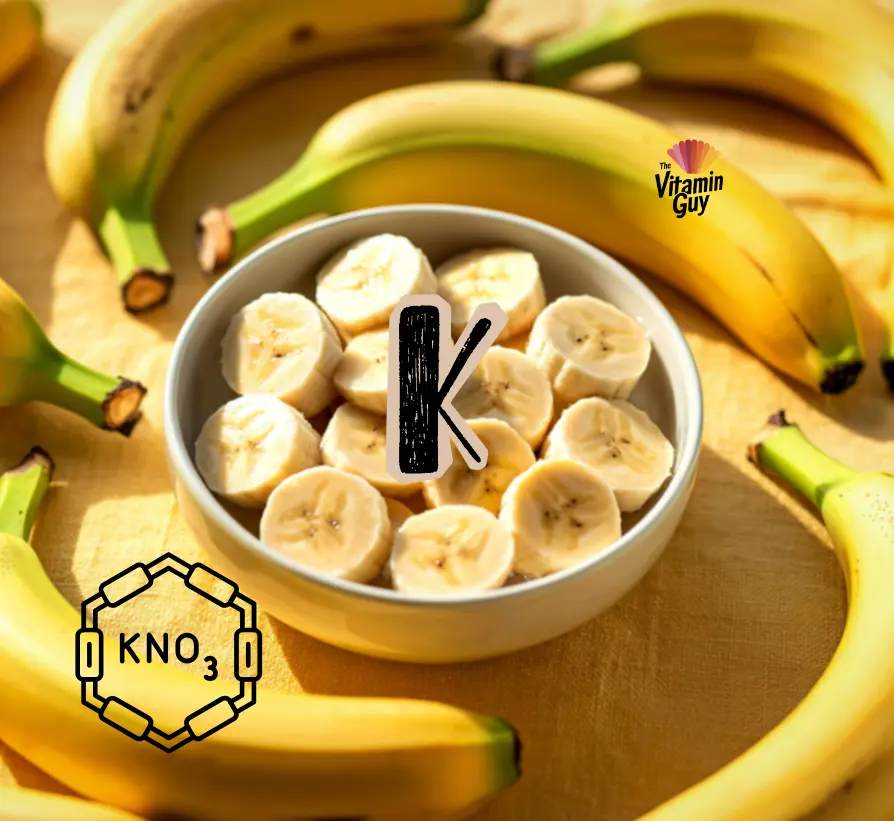
Banana
1 medium
~350–420 mg
Popular, but not the only option and not the highest.
Tomato paste / tomato-rich dishes
2–4 tbsp
~300–600 mg
Potassium can add up fast in concentrated tomato foods.
Orange juice
250 mL
~450–500 mg
Useful in some contexts, but watch total sugar load.
Greek yoghurt
200 g
~250–350 mg
Modest but reliable contributor.
Salmon
120 g cooked
~450–600 mg
Adds protein plus useful potassium.
Coconut water
250 mL
~400–600 mg
Can help intake, but not automatically appropriate for everyone.
Values are approximate and vary by variety, brand, ripeness, cooking method, and serve size. Cooked foods may concentrate or dilute potassium depending on preparation.
Practical tip: “Bananas for potassium” is only part of the story. Potatoes, legumes, cooked greens, avocado, tomato products, and dairy often contribute as much or more.
🚨 Low vs high potassium
Low potassium (hypokalaemia)
Low potassium can affect muscle and nerve function, and in more significant cases it can disturb heart rhythm. It is often caused by losses, not just low intake.
Weakness or unusual fatigue
Muscle cramps or muscle twitching
Constipation
Palpitations
Abnormal heart rhythm in more severe cases
Common causes
Vomiting or diarrhoea
Loop or thiazide diuretics
Poor intake during illness
Laxative misuse
Excessive sweating without adequate intake
Magnesium deficiency making correction harder
High potassium (hyperkalaemia)
High potassium is not something to self-manage. It can become dangerous quickly, especially in people with kidney impairment, significant illness, or certain medicines.
May cause no obvious symptoms early on
Weakness or heaviness
Tingling or unusual sensations
Palpitations
Serious cardiac conduction abnormalities in significant cases
Common causes
Kidney disease or reduced renal function
ACE inhibitors or ARBs
Potassium-sparing diuretics
Adrenal disorders
Excessive supplemental potassium
Clinical caution: both low and high potassium can affect heart rhythm. Sudden weakness, palpitations, collapse, chest symptoms, or severe illness need urgent medical assessment, not supplement guessing.
🧪 Testing and monitoring
Potassium status is usually checked with a serum potassium blood test, but interpretation needs context. A result can be distorted by haemolysis, dehydration, acid–base status, medicines, kidney function, or the timing of sample processing.
Test / clue
What it shows
Why it matters
Serum potassium
Current blood potassium concentration
Main screening test, but not a full picture of total body potassium.
Haemolysis check
Whether the blood sample was damaged
Haemolysis can falsely raise potassium.
ECG
Electrical effects on the heart
Useful when potassium is significantly abnormal or symptoms are concerning.
Urinary potassium
Renal potassium handling
Can help distinguish renal losses from other causes in clinical assessment.
Kidney function tests
Renal capacity to regulate potassium
Critical when hyperkalaemia risk is present.
Magnesium
Related electrolyte status
Low magnesium can make hypokalaemia difficult to correct.
Reference intervals vary by laboratory. Potassium results should be interpreted alongside symptoms, medicines, renal function, acid–base status, hydration state, and ECG findings where relevant.
🔄 Medicines, nutrients, and clinical interactions
Medicines that may raise potassium
ACE inhibitors
Angiotensin receptor blockers (ARBs)
Potassium-sparing diuretics
Some kidney-related medication regimens
Medicines that may lower potassium
Loop diuretics
Thiazide diuretics
Some laxative overuse patterns
Ongoing GI-loss situations
Key nutrient interaction
Magnesium matters. If magnesium is low, correcting potassium can be more difficult. That is one reason electrolyte problems often need proper clinical assessment rather than one isolated supplement.
👀 Who should pay closer attention
People at risk of low potassium
Those with ongoing vomiting or diarrhoea
People using loop or thiazide diuretics
People with poor intake during illness
Heavy sweaters with inadequate replacement
People at risk of high potassium
Kidney disease or reduced kidney function
People on ACE inhibitors, ARBs, or potassium-sparing diuretics
People using potassium supplements without supervision
Some endocrine and cardiac patients
Food-first is usually the smarter move
For most healthy people, improving dietary potassium through whole foods is the safer and more sensible approach. High-dose supplemental potassium is not a casual wellness product.
✅ Practical potassium tips
Build potassium across the day using potatoes, legumes, dairy, fruit, avocado, cooked greens, and tomato-based meals.
Do not assume a sports drink fixes everything. Context matters.
If you are on blood pressure or diuretic medication, do not self-prescribe potassium.
Persistent cramps, weakness, palpitations, or unexplained fatigue deserve proper assessment.
Low potassium and low magnesium can travel together.
No. Bananas are fine, but they are not the whole story. Potatoes, legumes, avocado, cooked greens, tomato products, dairy, and some fish can all be strong contributors.
Can low potassium cause cramps or weakness?
It can. Low potassium may contribute to weakness, muscle cramps, constipation, and abnormal heart rhythm, especially when the drop is more significant or ongoing.
Can too much potassium be dangerous?
Yes. High potassium can be serious, especially in people with kidney disease or those taking certain medicines. It can affect cardiac conduction and may require urgent medical care.
Should I take a potassium supplement for fatigue or cramps?
Not blindly. Cramps and fatigue can have many causes. Potassium supplements are not appropriate for everyone and can be risky in the wrong clinical setting. Food-first and proper assessment is the safer path.
Why does magnesium matter when potassium is low?
Magnesium helps with potassium handling at the cellular and renal level. If magnesium is low, potassium can be harder to normalise. That is why electrolyte issues often need a broader review.
Does potassium help blood pressure?
A potassium-rich whole-food diet can support healthier blood pressure regulation in many people with normal kidney function. That does not mean high-dose potassium supplements are a good idea for everyone.
📚 References and further reading
NHMRC & New Zealand Ministry of Health. Nutrient Reference Values for Australia and New Zealand: Potassium. Available at: NRV Potassium
Food Standards Australia New Zealand. Australian Food Composition Database. Available at: FSANZ
NIH Office of Dietary Supplements. Potassium Fact Sheet. Available at: NIH ODS Potassium
TGA-compliant note: This page is educational and describes normal physiological roles, food sources, and evidence-informed safety considerations. It does not claim to diagnose, treat, cure, or prevent disease.