🧬 Identity
FamilyFat-soluble vitamin in the vitamin K group.
Main dietary formVitamin K1 (phylloquinone).
Related formsVitamin K2 (menaquinones such as MK-4 and MK-7) is a separate but related family.
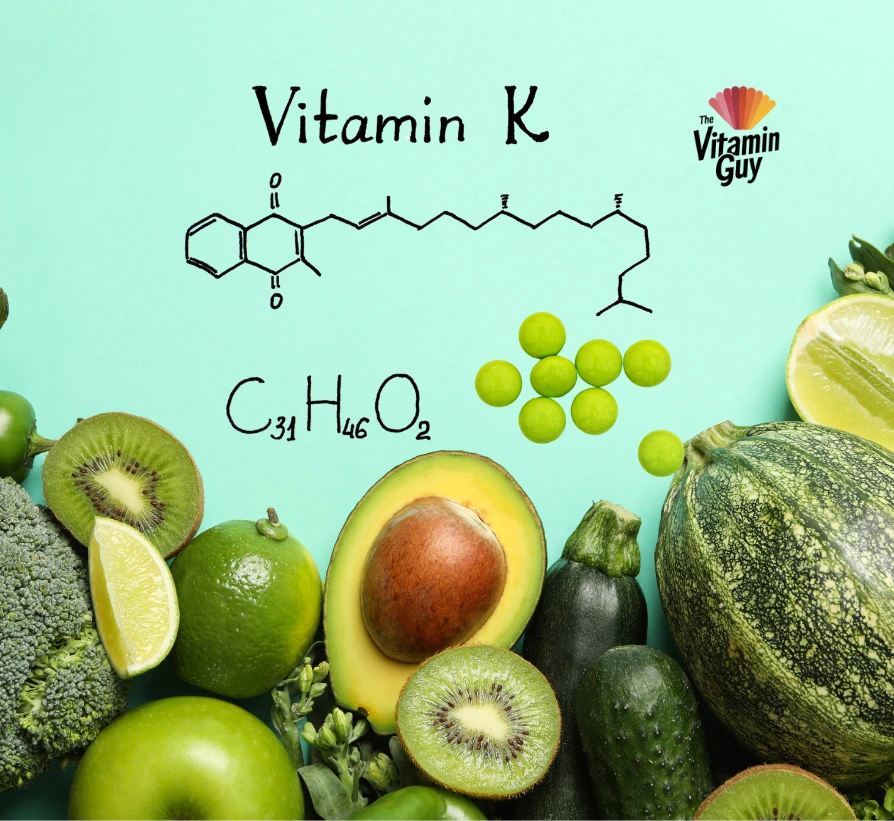
Chemical formulaC31H46O2

A practitioner-grade overview of vitamin K1: what it does, where it is found, how it is absorbed, when status can fall, what matters with warfarin, and how to think about food consistency without hype.
🔑 Core Function: Vitamin K1 is the main dietary form of vitamin K and is best known for supporting normal blood clotting through activation of vitamin K–dependent proteins. It also contributes to activation of other Gla-proteins involved in normal physiology, including bone-related proteins.
The fast version first. Then the deeper clinical and practical detail below.
Upper level: not established for vitamin K1 in Australian NRVs.
Vitamin K1 helps your body activate proteins needed for normal clotting. Most people get it from greens and herbs. Trouble usually shows up when intake is very low, absorption is impaired, or medication gets involved.
Practical reality: this is not usually a “mega-dose” nutrient. It is more about consistent food intake and knowing when risk factors are present.
What vitamin K1 actually does, minus the fluff.
Do not overhype this nutrient. Vitamin K1 has a well-established role in clotting and an evidence-backed physiological role in activation of vitamin K–dependent proteins.
That does not mean every person needs a supplement, and it does not justify exaggerated claims around “detox”, “miracle circulation”, or broad disease treatment language.
This is where the practical value lives. Intake alone is not the whole story.
Simple food move: if you eat kale, spinach, broccoli, parsley, or silverbeet completely plain and fat-free, you are leaving absorption on the table. Pair greens with a sensible fat source.
This table is designed to be practical, not performative. Real food, real meals, real use.
| Food group | Examples | K1 richness | Practical note | Best meal strategy |
|---|---|---|---|---|
| Dark leafy greens | Kale, spinach, silverbeet, collards | Very high | Usually the most concentrated routine dietary sources | Cook lightly or serve with oil, egg, avocado, nuts or seeds |
| Fresh herbs | Parsley, basil, coriander | High | Small portions can still meaningfully add up | Use generously in salads, omelettes, bowls, yoghurt sauces |
| Cruciferous vegetables | Broccoli, Brussels sprouts, cabbage | Moderate to high | Useful for people who do not tolerate large salad volumes | Roast or steam and finish with oil or butter |
| Lettuce greens | Cos/romaine, mixed lettuce, rocket | Moderate | Less concentrated than kale or parsley, but still useful | Build consistency through frequent mixed salads |
| Plant oils | Canola, soybean, some blended vegetable oils | Variable | Can contribute, but quality and amount vary a lot | Use as part of meals rather than relying on oils alone |
| Green vegetable add-ons | Green beans, peas, asparagus | Lower to moderate | Support baseline intake but are not usually “top-tier” sources | Useful alongside a main green source |
Food composition values vary with variety, growing conditions, storage, and preparation. For real-life use, the bigger issue is usually consistent intake pattern, not obsessing over a tiny numeric difference between two bunches of spinach.
Deficiency in healthy adults is uncommon. When it shows up, there is usually a reason.
Newborn babies are a special case because placental transfer is poor, stored reserves are low, and breast milk contains limited vitamin K. This is why neonatal vitamin K prophylaxis exists.
Bottom line: vitamin K in newborns is not a casual wellness discussion. It is a proper safety issue.
There is no simple one-size-fits-all screening test for the general public.
This is the section people screw up most often.
| Medication / factor | What matters | Risk / issue | Practical guidance |
|---|---|---|---|
| Warfarin / vitamin K antagonists | Vitamin K intake influences anticoagulant effect | Large intake swings can destabilise management | Keep intake consistent and follow prescribing clinician advice |
| Broad-spectrum antibiotics | May alter gut microbial contribution and overall vitamin K context | Status may be more vulnerable in prolonged or complex cases | Watch the bigger clinical picture, especially if diet or absorption is poor |
| Orlistat | Reduces fat absorption | Can lower absorption of fat-soluble vitamins including K | Medication review and clinician guidance matter |
| Bile acid sequestrants | Can impair fat-soluble vitamin absorption | Lower vitamin K absorption over time in some people | Review diet, symptoms, and medication plan with clinician |
| Severe fat restriction | Reduces absorption opportunity | Can work against adequate uptake even with “healthy” food choices | Greens plus sensible fat is usually smarter than fat-free dogma |
Do not tell warfarin users to “avoid vitamin K completely”. That advice is lazy and often unhelpful.
The real issue is usually consistency. A steady pattern of intake is generally more useful than bouncing between almost none and huge salad binges.
Do not mash them together and pretend the discussion is identical.
| Feature | Vitamin K1 (Phylloquinone) | Vitamin K2 (Menaquinones) |
|---|---|---|
| Main dietary sources | Leafy greens, herbs, crucifers, some plant oils | Fermented foods and some animal-derived foods, depending on the menaquinone form |
| Main page focus here | Yes — this page is about K1 | No — covered separately |
| Shared biology | Participates in vitamin K–dependent carboxylation | Participates in vitamin K–dependent carboxylation |
| Common public confusion | Often reduced to “just clotting” | Often over-marketed with exaggerated claims |
| Best next step | Understand food consistency and absorption | Read the dedicated K₂ page before making assumptions |
For the K₂ deep dive, use the dedicated page: Vitamin K₂ (Menaquinones).
What is solid, what is plausible, and what is getting oversold.
The part most people actually need.
Built for readers and search engines, without turning the page into junk.
Vitamin K1 mainly supports activation of proteins needed for normal blood clotting. It also contributes to activation of other vitamin K–dependent proteins involved in normal physiology.
The richest routine food sources are usually dark leafy greens such as kale, spinach and silverbeet, plus herbs like parsley and basil. Broccoli, Brussels sprouts and some plant oils can also contribute.
Not automatically. The usual principle is consistency, not panic. Large changes in vitamin K intake can affect warfarin management, so people taking warfarin should follow their prescriber’s advice before changing diet or supplements.
Clinically significant deficiency is uncommon in healthy adults eating a varied diet. Risk rises in settings such as fat malabsorption, significant gastrointestinal problems, medication interactions, or special neonatal circumstances.
Yes. Vitamin K1 is fat-soluble, so absorption is generally better when green vegetables are eaten as part of a meal containing some dietary fat.
No. They are related forms within the vitamin K family and share some biology, but they are not identical. Vitamin K1 is the main dietary phylloquinone form and this page focuses specifically on K1.
Keep the claims grounded and the wording clean.
TGA-compliant note: This page is educational and describes normal physiological roles, food sources, and practical considerations. It does not claim to diagnose, treat, cure, or prevent disease.
General information only: Supplements, medications, and dietary changes may not be appropriate for everyone. People taking anticoagulants or managing complex health conditions should seek personalised clinical advice.