Let’s Stay In Touch

Stay Informed. Stay Well.

Subscribe for clinical wellness insights, service updates, and exclusive offers — prescribed by GPs and delivered by AHPRA-registered nurses across Queensland & Northern Rivers NSW. Your Email Subscribe I agree and have read the FAQs.

Shopping cart

Vitamin E Profile Australian-first Evidence-informed TGA-safe educational content

Vitamin E

Vitamin E is not one single molecule. It is a family of fat-soluble compounds called tocopherols and tocotrienols. In human nutrition, alpha-tocopherol is the reference form used for dietary requirements because the body preferentially retains it. Its core job is to help protect polyunsaturated fats in cell membranes and lipoproteins from oxidative damage. This page is educational only and is not a substitute for individual medical advice.

🔑 Core Function

Vitamin E is the body’s main fat-phase antioxidant. Think of it as a membrane shield: it helps stop chain reactions that can damage delicate fats in cell membranes, nerves, muscles, red blood cells, immune cells, and circulating lipoproteins.

Plain English: vitamin E helps protect fragile fats from going rancid inside the body.
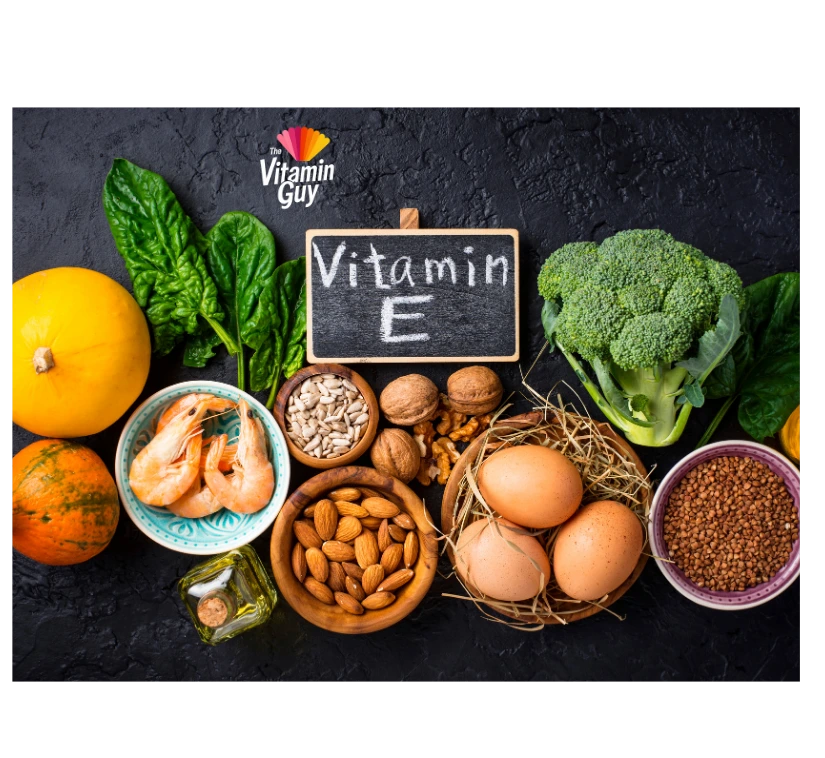
Vitamin E educational feature image by The Vitamin Guy

1) What Vitamin E Actually Is

“Vitamin E” includes eight naturally occurring compounds: four tocopherols and four tocotrienols. They share a chromanol head but differ in side-chain structure and methyl-group placement. That chemistry matters because it changes how well each form is absorbed, transported, retained, and studied.

FamilyFormStructural noteMain practical pointHuman retentionClinical status
TocopherolAlpha-tocopherolSaturated side chain; highest affinity for alpha-tocopherol transfer proteinReference form for human requirements and most blood testingHighestBest established
TocopherolBeta-tocopherolSaturated side chain; different methyl patternPresent in food, but not the main reference formLowerLess studied clinically
TocopherolGamma-tocopherolSaturated side chain; common in some mixed diets and oilsBiologically active, but not preferentially retained like alpha-tocopherolModerate to lowerInteresting, not NRV reference form
TocopherolDelta-tocopherolSaturated side chain; distinct methylation patternFood constituent with specialised research interestLowerLess clinically established
TocotrienolAlpha-tocotrienolUnsaturated side chain; more flexible membrane insertionOften discussed for membrane penetration and signalling effectsLower than alpha-tocopherolPromising but not settled
TocotrienolBeta-tocotrienolUnsaturated side chainPresent in selected food sourcesLowerResearch stage
TocotrienolGamma-tocotrienolUnsaturated side chainOften discussed in experimental cardio-metabolic and neuro researchLowerResearch stage
TocotrienolDelta-tocotrienolUnsaturated side chainSpecialist research interest; not a standard nutritional reference formLowerResearch stage

Bottom line: all eight belong to the vitamin E family, but alpha-tocopherol is the form most relevant to routine human nutrition, standard lab interpretation, and dietary reference values.

🆚 Tocopherols vs Tocotrienols

  • Tocopherols have saturated side chains.
  • Tocotrienols have unsaturated side chains that may move through membranes differently.
  • The liver preferentially keeps alpha-tocopherol in circulation.
  • Tocotrienols are scientifically interesting, but they are not yet a licence to make sweeping health claims.

🔬 Natural vs Synthetic

  • Natural: usually listed as d-alpha-tocopherol or RRR-alpha-tocopherol.
  • Synthetic: usually listed as dl-alpha-tocopherol or all-rac-alpha-tocopherol.
  • They are not nutritionally identical on a mg-for-mg basis in the body.
  • For modern labels, vitamin E is usually shown in mg, not old-school IU.

🧾 Practical supplement label tip

If a product does not clearly state the form, that is a quality red flag. “Vitamin E” on its own is vague. Better labels specify whether the product contains natural alpha-tocopherol, mixed tocopherols, tocotrienols, or a blend.

2) Functions in the Body

Vitamin E sits in fat-rich environments and helps interrupt lipid peroxidation. That makes it especially relevant in tissues and particles where vulnerable fats are concentrated.

AreaWhat vitamin E doesWhy it matters
Cell membranesHelps stop free-radical chain reactions in membrane lipidsProtects structural integrity of cells, especially those rich in polyunsaturated fats
Red blood cellsHelps protect membrane lipids from oxidative damageSupports red cell stability
Nervous systemHelps protect lipid-rich neural tissuesPart of why severe deficiency can show up as neuropathy or ataxia
Immune cellsContributes to membrane protection and normal immune functionLow status can impair optimal immune performance
LipoproteinsActs in the lipid phase of circulating particlesHelps limit oxidative damage in fat-containing blood components
Antioxidant networkWorks with vitamin C, selenium, glutathione-related enzymes, and CoQ10Antioxidants are a team, not isolated heroes
Important reality check: vitamin E has a legitimate biochemical role, but that does not mean mega-dosing automatically improves performance, reverses ageing, or fixes chronic illness. That is where marketing usually outruns evidence.

3) Absorption, Transport & Bioavailability

Because vitamin E is fat-soluble, digestion and absorption depend heavily on normal fat handling. This is the main reason deficiency is usually about malabsorption, not simply “not eating enough almonds”.

🍽️ What improves absorption

  • Eating vitamin E with a meal that contains some fat
  • Normal bile flow
  • Normal pancreatic enzyme activity
  • Healthy small-intestinal fat absorption

⛔ What reduces absorption

  • Very low-fat eating patterns
  • Chronic cholestatic or fat-malabsorptive conditions
  • Pancreatic insufficiency
  • Some weight-loss or bile-binding medications

🚚 Why alpha-tocopherol dominates

After absorption, the liver uses alpha-tocopherol transfer protein to preferentially package and release alpha-tocopherol back into circulation. That is the main biochemical reason alpha-tocopherol becomes the reference form in human nutrition.

Clinical pearl: if somebody has chronic fat-malabsorption, liver disease affecting bile flow, severe pancreatic dysfunction, or a rare genetic transport disorder, vitamin E status becomes much more relevant than it is in the average healthy adult.

4) Food Sources

Vitamin E lives mainly in fat-containing plant foods and oils. The strongest everyday pattern is simple: nuts + seeds + quality oils + avocado + minimally processed whole foods.

Food groupExamplesMain vitamin E patternPractical note
SeedsSunflower seedsTypically one of the richest everyday food sourcesHigh yield for small serving size
NutsAlmonds, hazelnuts, peanutsUseful mixed-food sourceEasy to use as snack, topper, or spread
Plant oilsSunflower, safflower, wheat germ, canola, olive oilsConcentrated delivery because vitamin E tracks with fatProcessing and storage matter; rancid oils are not a health flex
Whole plant foodsAvocado, spinach, leafy greensUsually moderate rather than extreme amountsHelpful as part of an overall pattern, not usually a sole solution
Wholegrains / cerealsWholegrain products, germ-containing foodsSome contribution depending on processingRefining tends to strip nutrient-rich fractions
Tocotrienol-rich sourcesPalm oil, rice bran, barley, annattoMore relevant to tocotrienol discussionInteresting, but not a reason to oversell tocotrienol supplements

🥗 Best everyday strategy

  • Add seeds to yoghurt, oats, or salads
  • Use nuts as a regular snack, not just “health food decoration”
  • Include avocado or olive oil in balanced meals
  • Do not rely on ultra-processed low-fat foods if you want robust fat-soluble nutrient intake

⚠️ Common mistake

People often assume “I eat vegetables” means fat-soluble vitamin intake is sorted. Not always. Fat-soluble nutrients usually do better in meals that actually contain some fat.

5) Vitamin E Requirements

Different regions use different reference systems. Australia uses Nutrient Reference Values (NRVs); the United States uses RDAs; Europe commonly uses AIs. These are not all calculated the same way, so they should not be treated as interchangeable.

Region / systemAdult menAdult womenPregnancyLactationUpper level / caution
Australia / New Zealand (NHMRC NRV)10 mg/day α-TE7 mg/day α-TE7 mg/day α-TE11 mg/day α-TE300 mg/day UL
United States (NIH / NAM RDA)15 mg/day15 mg/day15 mg/day19 mg/day1,000 mg/day UL*
Europe (EFSA AI)13 mg/day11 mg/day11 mg/day11 mg/day300 mg/day UL reference retained in EFSA review context

*US supplement labels may still trigger confusion because older products used IU. Modern labels should use mg. Natural and synthetic vitamin E are not identical on an old IU basis.

Australian practical point: for this page, the main local benchmark is NHMRC. That is the reference point that matters most for Australian educational content.

6) Deficiency, Low Status & Excess

Vitamin E deficiency is uncommon in healthy people eating a mixed diet. When it happens, it usually points to a bigger issue with absorption, transport, or rare genetics.

TopicWhat it usually looks likeWho is at higher riskPractical interpretation
Low intake onlyUsually mild or subclinical rather than dramatic deficiencyHighly restrictive diets, very low-fat eating patterns, poor overall diet qualityPossible, but still less common than internet wellness culture suggests
True deficiencyPeripheral neuropathy, ataxia, muscle weakness, visual problems, impaired red-cell stabilityFat-malabsorption, rare genetic disorders, severe chronic illness affecting lipid handlingThis is the real clinical territory for vitamin E deficiency
Rare genetic formsProgressive neurological signs if untreatedAVED, abetalipoproteinaemia, severe transport defectsNeeds specialist assessment, not self-diagnosis from social media
Excess / toxicity concernBleeding risk becomes the main concern at high supplemental intakesPeople on anticoagulants or antiplatelets, vitamin K issues, indiscriminate high-dose supplement usersDietary vitamin E from food is not the usual problem; high-dose supplements are

🔴 Deficiency clues

  • Numbness or altered sensation
  • Poor coordination / ataxia
  • Muscle weakness
  • Visual disturbance in more severe settings
  • History pointing to fat-malabsorption

⚠️ Excess clues

  • Easy bruising or bleeding tendency
  • Concurrent blood-thinning medication use
  • Stacking multiple “antioxidant” supplements without understanding dose overlap

💬 Honest take

For most people, food first makes sense. The strongest reason to care deeply about vitamin E deficiency is not vanity, “anti-ageing”, or hype. It is malabsorption, neurology, and genuine nutrition risk.

7) Testing & Interpretation

Vitamin E is usually assessed with serum or plasma alpha-tocopherol. Interpretation gets trickier when blood lipids are abnormal, because vitamin E travels in lipoproteins.

Test / markerWhat it tells youStrengthMain limitation
Serum / plasma alpha-tocopherolMain routine biomarker used in practiceMost availableAffected by circulating lipid levels
Alpha-tocopherol relative to lipidsUseful when cholesterol / triglycerides are elevatedMore informative in dyslipidaemiaLess commonly used in general settings
Clinical picture + historyIdentifies whether low status actually fits the personEssentialCannot replace lab data by itself
Interpretation pearl: a “normal-looking” vitamin E number can still mislead if somebody has abnormal lipids. In higher-lipid states, a lipid-adjusted view can be more meaningful than a raw standalone number.
Useful threshold note: values below roughly 12 μmol/L are commonly treated as suggestive of deficiency or inadequacy, but context still matters and lab interpretation should sit with the full clinical picture.

8) Interactions, Cautions & Supplement Reality Check

Vitamin E is one of those nutrients that sounds harmless because it is “just a vitamin”. That logic breaks fast once doses climb or blood-thinning medication enters the picture.

Interaction / cautionWhy it mattersPractical message
Warfarin / anticoagulantsHigh-dose vitamin E may increase bleeding tendencyDo not freelance high-dose supplementation around anticoagulants
Antiplatelet medicinesPotential additive effect on bleeding riskExtra caution if stacking supplements
Very high-dose antioxidant stacksCan create overlap, false confidence, or interaction riskMore is not automatically better
Fat-malabsorption treatments / bile-binding agentsMay reduce absorption of fat-soluble vitaminsTiming and monitoring may matter
Oncology contextHigh-dose antioxidants may complicate treatment discussionsPeople receiving chemo or radiotherapy should not self-prescribe high-dose vitamin E
Clinical Alert: high-dose supplemental vitamin E is not something to play with casually if somebody is on warfarin, other anticoagulants, or antiplatelet therapy, or has a bleeding tendency. Food sources are a different conversation from concentrated supplements.

9) Evidence Snapshot

This is where a lot of vitamin E content online goes off the rails. Here is the blunt version.

✅ Strong / well-established

  • Vitamin E is an essential fat-soluble antioxidant nutrient.
  • Alpha-tocopherol is the key human reference form.
  • Severe deficiency can cause real neurological and muscular problems.
  • Food sources matter and deficiency is most relevant in malabsorption/genetic settings.

⚖️ Promising but mixed

  • Tocotrienols for neuroprotection
  • Tocotrienols for lipid-related outcomes
  • Mixed tocopherols versus isolated alpha-tocopherol discussions

❌ Hype / oversold territory

  • “Mega-dose vitamin E reverses ageing”
  • “Everyone needs a high-dose antioxidant stack”
  • “Vitamin E is a blanket performance enhancer”
  • “Tocotrienols are proven miracle compounds”

10) Frequently Asked Questions

Straight answers. No fluff.

Is vitamin E deficiency common?

No. Not in healthy adults eating a mixed diet. True deficiency is usually linked to fat-malabsorption, rare genetic disorders, or major long-term nutritional compromise rather than everyday dietary imperfection.

Which form of vitamin E matters most in humans?

Alpha-tocopherol. It is the form the body preferentially retains and the form used for most nutrition reference values and standard lab interpretation.

Are tocotrienols better than tocopherols?

Not as a blanket statement. Tocotrienols are scientifically interesting and may have unique properties, but the evidence is not strong enough to make wild universal claims. For mainstream human nutrition, alpha-tocopherol is still the anchor.

Can too much vitamin E be harmful?

Yes. The real concern is high-dose supplementation, especially when combined with blood-thinning medication or other factors that increase bleeding risk. Food sources are not the main problem. Random high-dose supplement stacking is.

Should I take vitamin E with food?

Usually yes. Because it is fat-soluble, vitamin E is generally better absorbed when taken with a meal that contains some fat.

What foods are best for vitamin E?

The strongest everyday pattern is sunflower seeds, almonds, other nuts and seeds, plant oils, avocado, and whole foods that naturally contain healthy fats.

Does vitamin E help with skin?

Vitamin E contributes to normal membrane protection and antioxidant defence, which is relevant to skin biology. But that is very different from claiming it will cure skin disease, reverse ageing, or deliver guaranteed cosmetic results.

Can vitamin E replace a good diet?

No. A supplement cannot paper over a poor overall diet, poor fat quality, or chronic lifestyle issues. Vitamin E works best as part of a bigger nutritional pattern, not as a magic capsule.

11) References & Further Reading

  1. NHMRC / Eat for Health — Nutrient Reference Values: Vitamin E
  2. NIH Office of Dietary Supplements — Vitamin E Fact Sheet for Health Professionals
  3. NIH Office of Dietary Supplements — Vitamin E Fact Sheet for Consumers
  4. EFSA — Dietary reference values: vitamin E and cobalamin
  5. FSANZ — Australian Food Composition resources
  6. Sen CK, Khanna S, Roy S. Tocotrienols in health and disease: the other half of the natural vitamin E family.

© Cellular Intelligence Australia. All rights reserved. No part of this content may be reproduced without permission.