Let’s Stay In Touch

Stay Informed. Stay Well.

Subscribe for clinical wellness insights, service updates, and exclusive offers — prescribed by GPs and delivered by AHPRA-registered nurses across Queensland & Northern Rivers NSW. Your Email Subscribe I agree and have read the FAQs.

Shopping cart

Evidence-Informed Australian Context TGA-Compliant Educational Content

Selenium (Se)

Selenium is an essential trace mineral that helps support antioxidant defence, thyroid hormone metabolism, immune function, and normal cellular protection against oxidative stress. It is needed in small amounts, but both too little and too much can be a problem.

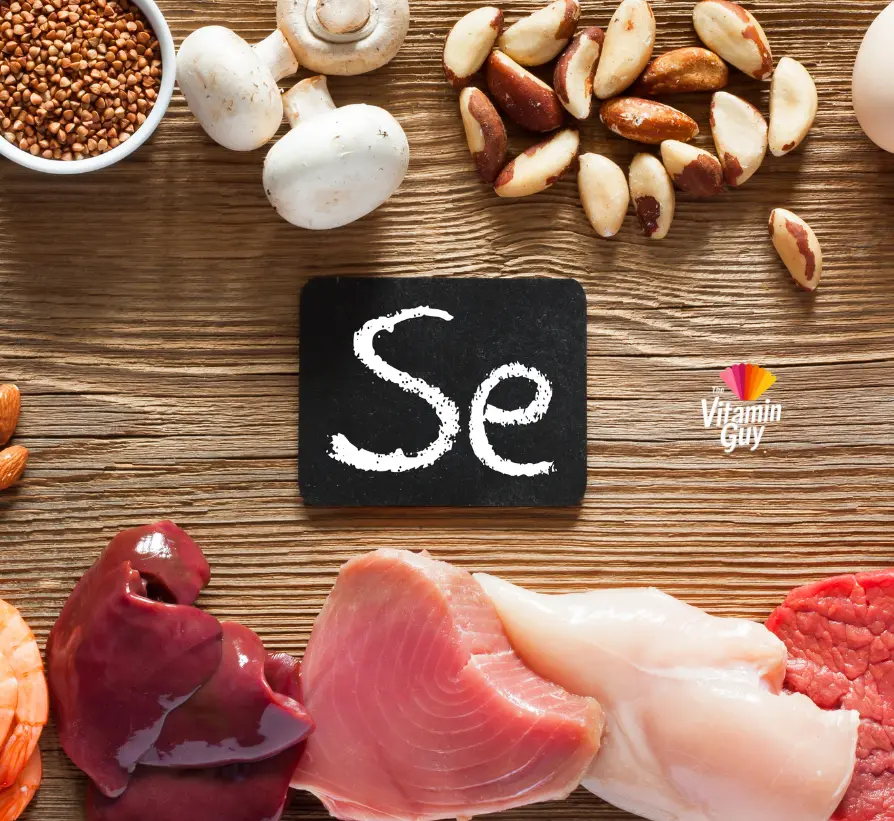
One of the biggest quirks with selenium is that food content depends heavily on soil selenium levels. That means the selenium content of grains, legumes, and even some animal foods can vary by region. Brazil nuts are famous for selenium, but they are also one of the easiest ways to overshoot intake.

Selenium nutrient education by The Vitamin Guy for Brisbane, Gold Coast and Northern Rivers NSW
Antioxidant defence • Thyroid support • Trace mineral balance
🔑 Core Function Builds key selenoproteins
Adult RDI Men 70 µg/day
Adult RDI Women 60 µg/day
Upper Level 400 µg/day

What selenium does in the body

Clear enough for everyday readers and detailed enough to build topical authority.

Family & status

Essential trace mineral

Selenium is a trace mineral, which means the body needs only small amounts. Even so, it is essential. The body uses selenium to build specialised proteins called selenoproteins, many of which help manage oxidative stress and thyroid hormone activity.

Plain-language summary

Small dose, big impact

Selenium helps protect cells, supports normal immune function, and helps the body handle thyroid hormones properly. It is not something to megadose casually. The safe zone matters.

Main biological role

Antioxidant and thyroid support

Selenium is incorporated into enzymes such as glutathione peroxidases and iodothyronine deiodinases, which help activate or inactivate thyroid hormones.

Big usability point

More is not better

Selenium is a classic example of a nutrient where the dose window matters. Deficiency is bad. Excess is also bad. That is why random high-dose supplement use is not smart.

Australian context: selenium adequacy in Australia is usually reasonable, but food selenium content still varies, especially where soils differ. Imported foods and Brazil nuts can add even more unpredictability.

Forms of selenium

This matters because different forms behave differently in foods and supplements.

⚗️ Natural dietary forms

  • Selenomethionine: common in plant foods and many supplements
  • Selenocysteine: found in animal tissues and functional selenoproteins
  • Selenate / selenite: inorganic forms used in some fortified products or supplements

Element: Selenium (Se)
Atomic number: 34

📌 Practical takeaways

  • Selenomethionine is generally well absorbed
  • Food selenium content depends heavily on the soil where food was grown
  • Brazil nuts can contain wildly different selenium amounts from one batch to the next
  • Supplement labels matter because selenium doses add up fast

Key functions of selenium

Dense enough for authority, clean enough for readability.

🛡️ Antioxidant defence

Selenium helps form antioxidant enzymes such as glutathione peroxidases, which help protect cells from oxidative damage and support redox balance.

🦋 Thyroid hormone metabolism

Selenium-dependent enzymes help convert thyroid hormones into active or inactive forms. That means selenium supports normal thyroid hormone handling, not just raw thyroid output.

🧫 Immune function

Adequate selenium supports normal immune cell activity. That does not justify reckless “immune boosting” claims. It simply means selenium is part of normal immune physiology.

🔬 Cellular protection

Selenium contributes to selenoproteins involved in redox signalling, cellular resilience, and regulation of oxidative stress.

Best food sources of selenium

Food-first guidance is more useful and more credible than lazy supplement-first content.

FoodMain noteSelenium profilePractical caution
Brazil nutsVery concentrated sourceVery high, highly variableEasy to overshoot
SeafoodUseful whole-food sourceModerate to highVaries by species
Meat and poultryReliable contributor in mixed dietsModerateDepends on feed
EggsUseful everyday sourceModerateNot usually excessive
Dairy foodsCan contribute to total intakeLow to moderateVaries
Grains and legumesContent depends heavily on soilVariableRegional variation matters
Big caution: one Brazil nut is not the same as another. Selenium content can vary massively. Telling people to eat heaps of Brazil nuts every day without context is sloppy advice.

Absorption and bioavailability

Clear, useful, and not padded with junk.

✅ What supports selenium intake

  • Selenomethionine is generally well absorbed
  • Mixed diets with seafood, eggs, meat, or selenium-containing grains can help
  • Whole-food intake is usually safer than casual high-dose self-supplementing

⚠️ What may reduce selenium adequacy

  • Low-selenium soils leading to lower crop content
  • Very limited or restrictive food intake
  • Gastrointestinal malabsorption conditions
  • Long-term highly selective diets with poor variety

📌 Why soil matters

Selenium is not distributed evenly in the environment. Soil content influences plant content, and plant content then affects animals and humans. That is why food tables for selenium often look messier than for many other minerals.

Australian intake targets

Source: NHMRC Nutrient Reference Values. Educational context only.

Life stageRecommended intakeUpper level
Adult men70 µg/day400 µg/day
Adult women60 µg/day400 µg/day
Pregnancy65 µg/day400 µg/day
Lactation75 µg/day400 µg/day

Values shown for general educational use. Requirements and safe intake strategy can vary with clinical context.

Low selenium vs too much selenium

This section gets searched constantly, so it needs to be tight and useful.

🔻 Low selenium intake

  • May impair antioxidant defence
  • May affect thyroid hormone handling
  • May reduce normal immune function
  • Severe deficiency has been linked to Keshan disease in low-selenium regions

Selenium deficiency is considered uncommon in Australia overall, but intake can still vary and context matters.

🔺 Excess selenium intake (selenosis)

  • Hair loss or brittle hair
  • Nail brittleness or nail changes
  • Gastrointestinal upset
  • Garlic-like or metallic breath odour
  • Fatigue, irritability, or nerve symptoms in severe cases

Over-supplementation is the usual problem, not normal food intake. Brazil nuts plus supplements is where people can get stupid fast.

Clinical caution: Selenium is not a “more is better” nutrient. High-dose stacking from multivitamins, specialty supplements, and Brazil nuts can push people into excess.

Testing and monitoring

Simple, honest, and actually useful.

🧪 Routine tests

Serum or plasma selenium may be used in clinical or nutritional assessment, though interpretation still needs context and is not perfect on its own.

🔬 Advanced markers

Selenoprotein P may be used in more advanced or research settings, but it is not standard in everyday care.

📋 What matters clinically

Intake pattern, supplement use, thyroid context, and symptoms matter more than chasing a single isolated number with no context.

Interactions and practical considerations

Readable enough for users, solid enough for authority.

💊 Thyroid context

Selenium is involved in thyroid hormone metabolism, so people with thyroid issues should avoid random high-dose self-prescribing and should get proper clinical advice instead.

🛡️ Vitamin E synergy

Selenium and vitamin E work in related antioxidant systems. That does not mean megadosing both is automatically a good idea.

📦 Supplement stacking

Selenium often hides in multivitamins, “thyroid support” products, antioxidant blends, and standalone capsules. That is how people accidentally double up.

Who may need closer attention to selenium intake

Broad enough for SEO, specific enough to be useful.

🥗 People with restrictive diets

Very narrow diets, poor food variety, or long-term avoidance of common selenium-containing foods can reduce intake.

🩺 People with gastrointestinal malabsorption

Conditions affecting digestion or absorption can make selenium status harder to maintain.

🦋 People using thyroid-related supplements

This group needs caution because selenium is often marketed aggressively around thyroid health, sometimes with doses that are not sensible.

Evidence snapshot

Clean signal, no hype.

🔬 Well-established

  • Selenium is essential for selenoproteins
  • Supports antioxidant enzyme systems
  • Supports normal thyroid hormone metabolism

⚖️ Mixed or context-dependent

  • Supplement benefit often depends on baseline selenium status
  • Not everyone benefits from extra selenium
  • High status plus more selenium is not automatically helpful

❌ Overhyped claims

  • Routine high-dose selenium for “immune boosting”
  • Blanket use for disease prevention without context
  • Casual long-term supplementation with no reason or monitoring
Better strategy: get the basics right first — diet, context, actual intake, and measured need — instead of treating selenium like a magic fix.

Keep exploring

Good internal linking helps users and helps rankings.

Frequently asked questions about selenium

Useful for readers and strong for long-tail search coverage.

What does selenium do in the body?
Selenium helps the body build selenoproteins involved in antioxidant defence, thyroid hormone metabolism, immune function, and protection against oxidative stress.
What foods are high in selenium?
Brazil nuts, seafood, meat, eggs, and some grains can all provide selenium. The catch is that selenium content varies, especially in plant foods, because soil levels differ.
Can you get too much selenium?
Yes. Too much selenium can lead to selenosis, which may cause hair and nail changes, gastrointestinal upset, garlic-like breath, and other symptoms. Excess usually comes from supplements or very high intake of concentrated food sources.
Are Brazil nuts a good source of selenium?
Yes, but they are also unpredictable. Brazil nuts can contain a lot of selenium, and sometimes a lot more than people expect. That is why using them casually as a daily “hack” can backfire.
Does selenium support the thyroid?
Selenium supports normal thyroid hormone metabolism because selenium-dependent enzymes help activate and deactivate thyroid hormones. That does not mean more selenium is always better for thyroid health.
Should everyone take a selenium supplement?
No. Supplement benefit depends on baseline intake and context. Routine high-dose selenium use without a clear reason is not a smart default.

References and further reading

Trust matters. Thin generic pages usually fail here.

  1. NHMRC. Nutrient Reference Values for Australia and New Zealand — Selenium.
  2. Food Standards Australia New Zealand (FSANZ). Australian Food Composition Database.
  3. NIH Office of Dietary Supplements. Selenium Fact Sheet.
  4. Peer-reviewed literature on selenium biology, selenoproteins, thyroid metabolism, and intake safety.
TGA-compliant note: This page is educational and describes normal physiological roles of selenium. It does not claim to diagnose, treat, cure, or prevent disease. Any IV therapy information on this website is general only, with independent GP assessment and prescription required where applicable.

© Cellular Intelligence Australia. All rights reserved. No part of this content may be reproduced without permission.