Essential trace mineral
Iodine is a trace mineral. The body needs only small amounts, but it is absolutely essential. Without enough iodine, the thyroid cannot produce normal amounts of thyroxine (T4) and triiodothyronine (T3).


Iodine is an essential trace mineral needed to make thyroid hormones, which help regulate metabolism, growth, energy use, and brain development. It matters across the lifespan, but it is especially important during pregnancy, infancy, and early childhood.
For many Australians, iodine intake comes from iodised bread, dairy, eggs, seafood, and iodised table salt. Specialty salts such as Himalayan salt, gourmet sea salt, and pink salt are often not iodised.
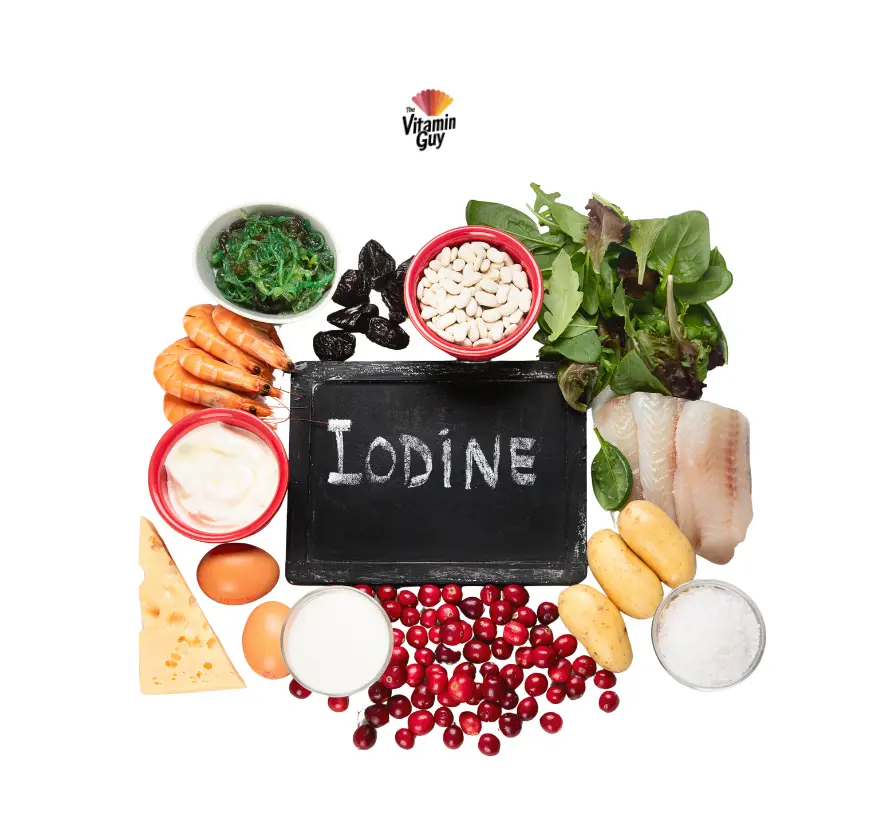
Clean, high-value overview for readers and search engines without bloated filler.
Iodine is a trace mineral. The body needs only small amounts, but it is absolutely essential. Without enough iodine, the thyroid cannot produce normal amounts of thyroxine (T4) and triiodothyronine (T3).
Thyroid hormones help regulate how fast the body uses energy. They also influence temperature regulation, nervous system development, growth, and normal metabolic activity.
Iodine is especially important during pregnancy and breastfeeding because the developing baby depends on an adequate supply for normal brain and nervous system development.
A lot of people assume all salt contains iodine. That is wrong. Iodised table salt does. Many boutique salts and “natural” salts do not.
High-scannability summary blocks for readability and user retention.
Food iodine content can vary a lot. Seaweed is the biggest wildcard and can swing from moderate to extreme.
| Food | Typical note | Approx. iodine | % Adult RDI |
|---|---|---|---|
| Iodised table salt (small amount) | Main fortified household source when used appropriately | Varies | Varies |
| Bread made with iodised salt | Important Australian public health source | Variable | Variable |
| Milk and yoghurt | Often useful contributors in Australian diets | Variable | Variable |
| Eggs | Moderate dietary source | Moderate | Moderate |
| Fish and seafood | Can contribute meaningfully depending on type and origin | Variable | Variable |
| Seaweed / kelp | Can be extremely high; biggest excess risk food source | Highly variable | Can exceed 100% |
Food iodine content varies with farming practices, animal feed, processing, region, and product type. Seaweed is the least predictable source and the easiest way to overshoot intake.
Good page structure matters. This section improves topical depth without making the page bloated.
Some foods such as cassava and large amounts of raw Brassica vegetables contain compounds that may interfere with iodine use when iodine intake is already low. For most people eating a balanced diet, these foods are not the main problem. Low iodine intake is the problem.
Use this as general educational context, not a substitute for personalised care.
| Life stage | Recommended intake | Upper level |
|---|---|---|
| Adults | 150 µg/day | 1100 µg/day |
| Pregnancy | 220 µg/day | 1100 µg/day |
| Lactation | 270 µg/day | 1100 µg/day |
This is the section people actually look for, so it needs to be crisp and clear.
In public health, low iodine status is usually assessed across populations. In individuals, the bigger picture usually includes diet history plus thyroid function tests.
This is where “natural” products can backfire. Kelp is not automatically safe just because it is natural.
Testing has context. There is no magic single lab number that tells the whole story for every person.
Urinary iodine concentration (UIC) is commonly used for assessing iodine status at a population level. It is more useful in groups than as a one-off standalone answer for a single person.
Individual review usually includes diet history, thyroid stimulating hormone (TSH), and free T4, with broader thyroid work-up when clinically indicated.
If iodine is in question, it is smarter to review the full thyroid and dietary context than to obsess over random supplement doses.
Useful, readable, and compliant.
People taking thyroid medication should avoid making big, erratic changes to iodine intake without clinical advice. Consistency matters more than random swings.
These can deliver a lot more iodine than expected. That is the fastest way for a “healthy” choice to become a thyroid problem.
Diets that exclude bread, dairy, eggs, seafood, and iodised salt can quietly push iodine intake too low, especially over time.
Useful for readers, clinicians, and search visibility.
Requirements are higher. This life stage has the least room for complacency because iodine supports the baby’s developing brain and nervous system.
People eating very limited diets, avoiding common iodine sources, or relying only on specialty salts can drift into low intake without realising it.
Existing thyroid conditions can make the body less tolerant of big changes in iodine exposure. That includes abrupt supplementation or high seaweed intake.
No fluff. Just the key signal.
Internal linking helps users and helps rankings. This is basic but important.
FAQ content improves relevance, readability, and long-tail search coverage.
Reference section kept clean for trust and compliance.
© Cellular Intelligence Australia. All rights reserved. No part of this content may be reproduced without permission.