Let’s Stay In Touch

Stay Informed. Stay Well.

Subscribe for clinical wellness insights, service updates, and exclusive offers — prescribed by GPs and delivered by AHPRA-registered nurses across Queensland & Northern Rivers NSW. Your Email Subscribe I agree and have read the FAQs.

Shopping cart

Evidence-Informed Australian Context TGA-Compliant Education

Sulphur (S)

Educational nutrient profile for The Vitamin Guy. Independent, evidence-informed information on sulphur’s normal physiological roles, food sources, protein links, and practical Australian context.

Sulphur is not usually talked about as a standalone nutrient because most people get it through sulphur-containing amino acids in protein foods, especially methionine and cysteine. In plain English: if your protein intake is solid, your sulphur intake is usually solid too. It matters because it helps build structural proteins, supports glutathione production, and contributes to sulphation pathways used in normal metabolism and detoxification chemistry.

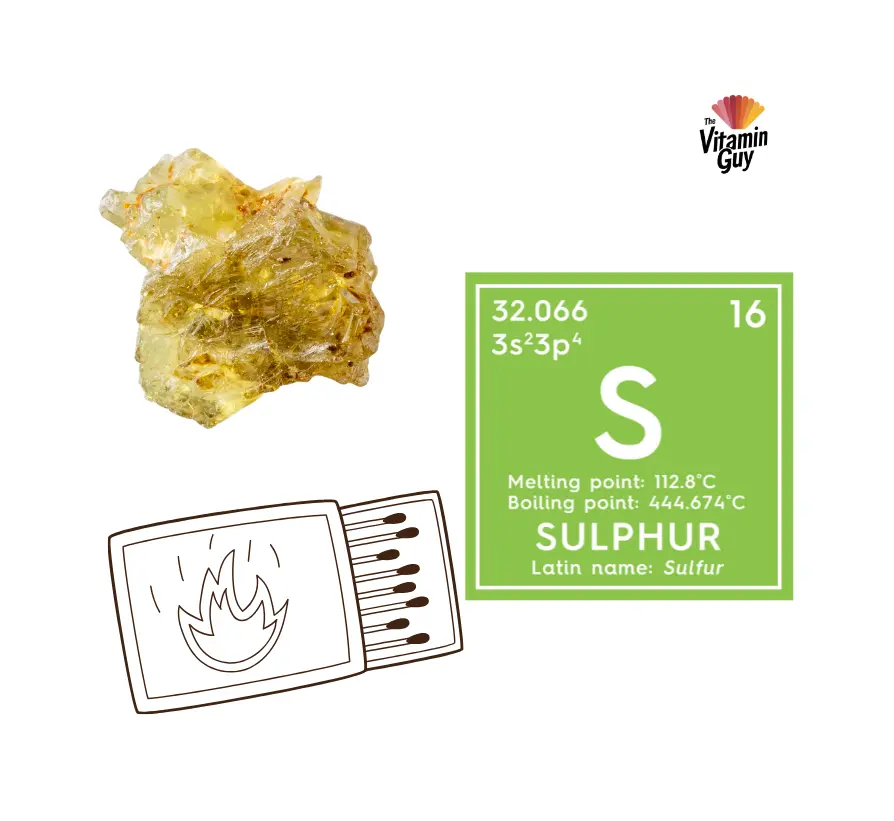
Sulphur nutrient profile for The Vitamin Guy with Australian educational wellness context
Sulphur is functionally tied to protein quality, glutathione synthesis, and structural compounds like keratin and connective-tissue proteins.

Quick overview

This page is written to be useful for both general readers and clinicians who want a fast, clean overview without inflated claims.

🧬 Family & Status

ElementSulphur (S)
ClassMacromineral element, mainly delivered via amino acids
EssentialityNo separate Australian NRV; generally met through adequate protein intake
Main body formsMethionine, cysteine, taurine, sulphate, glutathione, sulphated compounds

🔑 Core Function

Sulphur helps the body build and maintain proteins, especially those that need strong structural bonds. It is also part of glutathione, one of the body’s key endogenous antioxidants, and contributes to sulphation, a normal biochemical pathway involved in hormone handling, xenobiotic metabolism, and connective tissue chemistry.

🌿 Plain-language summary

Think of sulphur as one of the body’s structural and chemical support materials. You mostly get it from eggs, meat, fish, dairy, legumes, nuts, seeds, plus sulphur-rich vegetables like garlic, onions, broccoli, cabbage, and Brussels sprouts.

Physiology, food, deficiency, and evidence

⚗️ Molecular & chemical identity

  • Element symbol: S
  • Atomic number: 16
  • Biological delivery: Mostly through methionine and cysteine in dietary protein
  • Key related compounds: Glutathione, taurine, coenzyme A, sulphated glycosaminoglycans

In practical nutrition, sulphur is rarely assessed by itself. It is usually considered within the bigger picture of protein adequacy and sulphur amino acid availability.

⚡ Main physiological roles

  • Protein structure: Disulphide bonds help stabilise keratin and many other proteins
  • Antioxidant defence: Cysteine is required for glutathione synthesis
  • Sulphation chemistry: Used in normal metabolism of some hormones, compounds, and metabolites
  • Connective tissue support: Sulphated molecules contribute to cartilage and extracellular matrix chemistry
  • Cellular metabolism: Sulphur is present in coenzyme A and other biologically active compounds

🍽️ Absorption & bioavailability

Best practical determinantAdequate total protein intake
Usually improves withBalanced intake of animal or well-combined plant proteins
May fall withProtein-energy malnutrition, restrictive diets, poor appetite, severe illness
Clinical realityLow sulphur status usually reflects broader low protein or low amino acid intake

Reality check: most healthy adults do not need a standalone “sulphur supplement.” The bigger issue is usually overall diet quality, especially protein adequacy.

🥗 Food sources

Food groupExamplesWhy it matters
Animal proteinEggs, fish, poultry, beef, lamb, yoghurt, cheeseStrong source of methionine and cysteine
Plant proteinLentils, chickpeas, beans, soy foods, nuts, seedsUseful contribution, especially when total protein intake is adequate
Allium vegetablesGarlic, onion, leek, shallotsContain organosulphur compounds with recognised food-based biological interest
Brassica vegetablesBroccoli, cabbage, kale, Brussels sprouts, cauliflowerProvide sulphur-containing phytochemicals such as glucosinolates
Mineral waterSome natural mineral watersCan add sulphate, but usually not the main nutritional source

🇦🇺 Australian NRVs

  • There is no separate Australian NRV published for sulphur as an isolated nutrient.
  • Australian guidance instead treats sulphur sufficiency as part of adequate protein and amino acid intake.
  • In practice, if dietary protein intake is appropriate, sulphur intake is generally assumed to be adequate too.

That means a sulphur page should not pretend there is some hidden RDI number that everyone is missing. There isn’t.

🚨 Deficiency & excess

Deficiency

There is no classic isolated sulphur deficiency syndrome recognised in routine practice. Problems are more likely to show up as part of low protein intake, malnutrition, severe illness, or poor overall dietary intake.

  • Muscle loss or poor recovery
  • Impaired wound healing
  • Brittle hair or nails
  • General signs of inadequate protein nutrition

Excess

Food-based sulphur intake is usually well tolerated. Certain high-sulphate waters or poorly tolerated supplements may contribute to gastrointestinal upset or loose stools. High-dose claims around “detox,” “anti-ageing,” or miracle joint repair are routinely overstated.

🧪 Testing & monitoring

  • No standard routine blood test exists for total sulphur status in everyday practice
  • Status is usually inferred from dietary history, protein adequacy, and broader nutritional context
  • Research settings may use plasma amino acids, glutathione markers, or specialised metabolic testing
  • Albumin is not a perfect nutrition marker, but may add context in some clinical scenarios

🔄 Interactions & context

  • Protein quality matters: sulphur intake depends heavily on amino acid intake
  • Vegetarian and vegan diets: can absolutely meet needs, but total protein quality and quantity still matter
  • Glutathione synthesis: depends on cysteine availability plus overall metabolic context
  • Supplement hype: compounds like MSM are commonly marketed aggressively, but broad claims often run ahead of the evidence

📊 Evidence snapshot

TopicWhat is solidWhat needs restraint
Structural protein roleSulphur amino acids are fundamental to protein structure and disulphide bond formationNo issue here. This is well-established basic physiology.
Glutathione linkCysteine availability matters for glutathione synthesisDoes not mean every person needs glutathione or sulphur supplements
“Detox” claimsSulphation is a real biochemical pathwayMarketing often exaggerates this into disease-treatment or miracle-cleanse claims
Cruciferous vegetablesSulphur-containing phytochemicals are scientifically interestingFood-based interest does not equal a disease-treatment claim
MSM / sulphur supplementsSome targeted research exists for specific use casesEvidence is nowhere near strong enough for sweeping anti-ageing or universal detox claims

Practical takeaways

✅ What matters most

  • Hit your protein needs consistently
  • Include a mix of protein foods and sulphur-rich vegetables
  • Do not confuse real biochemistry with overcooked supplement marketing
  • If your diet is very restrictive, reassess the whole protein picture first

⚠️ TGA-safe wording matters

For an Australian business site, this page should stay in the lane of normal physiological roles, food-based education, and honest discussion of evidence. Do not turn sulphur into a disease-treatment sales page. That is where sites drift into rubbish and regulatory trouble.

Frequently asked questions

Is sulphur an essential nutrient?

Sulphur is biologically essential, but it is usually obtained through sulphur-containing amino acids in protein foods rather than tracked as a separate standalone nutrient target.

Do Australians need a sulphur supplement?

Usually no. Most people who eat enough protein will get enough sulphur. Standalone sulphur supplementation is not a routine requirement for the general population.

What foods are richest in sulphur?

Eggs, meat, fish, dairy, legumes, nuts, seeds, onions, garlic, broccoli, cabbage, Brussels sprouts, and other protein- or crucifer-rich foods are strong practical sources.

What does sulphur do in the body?

It contributes to protein structure, glutathione production, and sulphation pathways used in normal biochemical processing.

Is there an Australian RDI or NRV for sulphur?

No separate Australian NRV is generally used for sulphur itself. Guidance is covered indirectly through protein and amino acid adequacy.

Can sulphur-rich vegetables support health?

Yes, as part of an overall healthy diet. Foods like garlic, onion, broccoli, and cabbage provide sulphur-containing compounds of biological interest. That does not justify exaggerated disease-treatment claims.


📚 References & further reading

  1. National Health and Medical Research Council (NHMRC). Nutrient Reference Values for Australia and New Zealand — Protein. View source
  2. Food Standards Australia New Zealand (FSANZ). Australian Food Composition Database. View source
  3. FAO/WHO/UNU. Protein and Amino Acid Requirements in Human Nutrition. WHO Technical Report Series 935. View source

TGA-compliant note: This page is educational and describes normal nutrient physiology, food sources, and evidence context. It does not claim to diagnose, treat, cure, or prevent disease.

© Cellular Intelligence Australia. All rights reserved. No part of this content may be reproduced without permission.