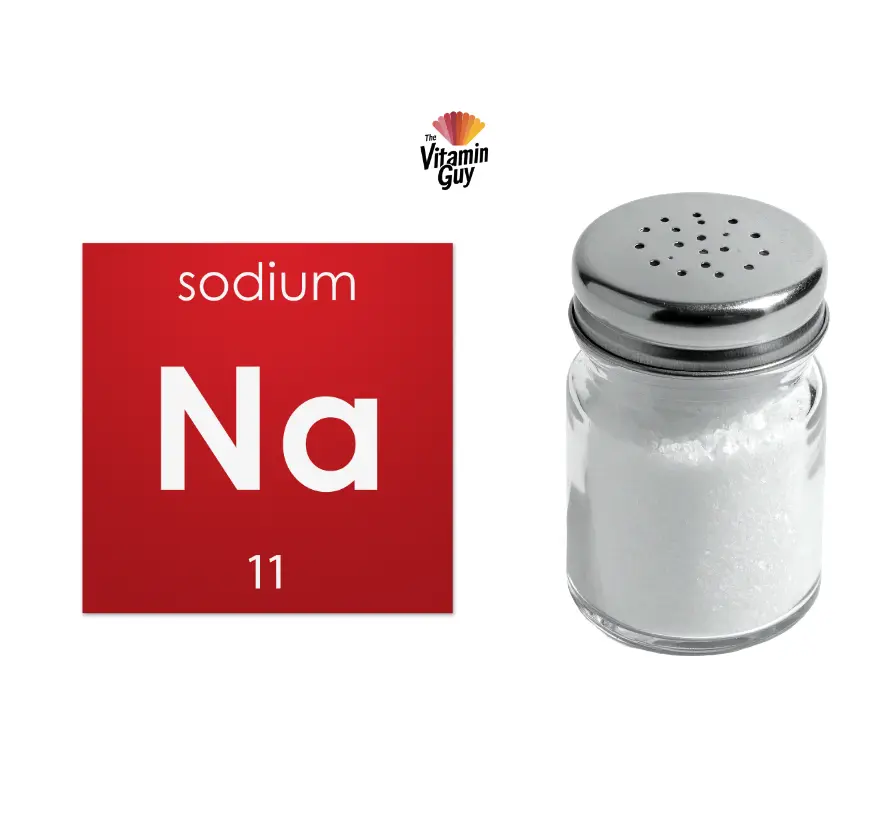
Quick sodium snapshot
Core function
Electrolyte
Primary extracellular cation that helps regulate body water movement and electrical activity.
Adult SDT
≤ 2,000 mg
Suggested Dietary Target for adults to help reduce chronic disease risk.
Adult AI
460–920 mg
Adequate Intake range for adults, depending on age and sex.
Reality check
65.6%
Of Australian adults had usual sodium intakes above the SDT in 2023.
Big misunderstanding: a person can have normal blood sodium on a blood test and still eat too much dietary sodium. Serum sodium mainly reflects water balance, not long-term salt intake.
🧬 What sodium actually is
ElementSodium (Na)
Dietary ionSodium (Na+)
Main body locationExtracellular fluid
Most common food formSodium chloride (table salt)
Other common formsSodium bicarbonate, sodium phosphate, sodium citrate
Salt is sodium chloride. Sodium is the biologically relevant part. Five grams of salt is roughly equal to about 2,000 mg of sodium.
⚡ Core functions
- Fluid balance: helps regulate extracellular fluid volume and osmolarity.
- Nerve signalling: sodium gradients are essential for action potentials.
- Muscle contraction: works with potassium and calcium to support normal muscle function.
- Blood pressure physiology: influences plasma volume and vascular responses.
- Acid–base support: contributes to pH regulation through transport systems and buffering partners.
- Nutrient transport: helps drive absorption of glucose and some amino acids in the gut.
🇦🇺 Australian sodium targets
Sodium is essential, but more is not better. In Australia and New Zealand, the Nutrient Reference Values list an Adequate Intake (AI) for daily physiological needs and a Suggested Dietary Target (SDT) to help reduce chronic disease risk.
| Measure | Adults | What it means |
|---|
| AI | 460–920 mg/day | Estimated intake likely to meet basic needs in healthy people. |
| SDT | ≤ 2,000 mg/day | Target associated with lower chronic disease risk, especially for blood pressure. |
| Salt equivalent | ~5 g salt/day | Equivalent to about one teaspoon of salt in total, from all sources combined. |
Reality in Australia: latest ABS data show nearly two in three adults had usual sodium intakes above the adult SDT. That means high intake is still the norm, not the exception.
Practical meaning: most of the reduction opportunity is not from avoiding the occasional pinch of salt. It is from cutting back on high-sodium packaged foods, takeaway meals, sauces, cured meats, and snack foods.
🥗 Major food sources of sodium
Fresh whole foods are usually naturally low in sodium. The biggest contributors are generally processed and prepared foods, where sodium is used for flavour, texture, shelf life, and food safety.
| Food category | Typical examples | Why it adds up fast |
|---|
| Breads and bakery items | Sliced bread, rolls, wraps, savoury baked goods | Not always “salty” in taste, but eaten often and in large amounts. |
| Processed meats | Ham, bacon, salami, deli meats, sausages | Salt is used heavily for curing, flavour, and preservation. |
| Sauces and condiments | Soy sauce, stock powder, gravy, pasta sauce, seasoning mixes | Small serves can contain a surprisingly large sodium load. |
| Snack foods | Chips, crackers, salted nuts, instant noodles | Easy to overeat and often heavily seasoned. |
| Fast food and takeaway | Burgers, pizza, fried foods, hot chips, kebabs | Large portions plus multiple high-sodium ingredients in one meal. |
| Canned and convenience foods | Canned soup, baked beans, frozen meals, packet pasta | Salt improves flavour stability and shelf life. |
Usually lower in sodium: fresh fruit, most vegetables, plain oats, rice, legumes without added salt, plain yoghurt, eggs, fresh meat, and homemade meals made from basic ingredients.
Usually higher in sodium: foods with labels such as “smoked”, “cured”, “seasoned”, “instant”, “flavoured”, “packet”, or “ready meal”.
🧂 Salt myths that need to die
- “Sea salt is healthy salt” — not really. It is still mostly sodium chloride.
- “Pink salt fixes mineral deficiencies” — no. Trace minerals are too small to matter clinically for most people.
- “If I don’t add table salt, my intake is low” — false. Most sodium comes from food made by someone else.
- “Low sodium blood test = I need more salt” — not automatically. That usually needs proper medical assessment.
Bottom line: the health issue is total sodium load, not whether it came from table salt, gourmet salt, sea salt, or Himalayan salt.
🚨 Low sodium in the body vs too much sodium in the diet
Low sodium in the blood (hyponatraemia)
Hyponatraemia is usually a water-balance or medical issue, not a simple “not enough salt” problem. It can happen with vomiting, diarrhoea, endurance events with overhydration, some medications, heart failure, liver disease, kidney problems, or Syndrome of Inappropriate Antidiuretic Hormone Secretion (SIADH).
- Early symptoms: headache, nausea, fatigue, fogginess
- More serious symptoms: confusion, vomiting, cramps, seizures
- Severe cases: medical emergency
Chronically high sodium intake
This is the much more common public-health problem. Over time, high sodium intake can contribute to higher blood pressure, fluid retention, and greater long-term cardiovascular and kidney risk, especially when paired with low potassium intake and poor overall diet quality.
🔄 What changes sodium needs
- Heavy sweating: heat, hard exercise, manual work, and endurance sport can increase sodium losses.
- Illness: diarrhoea and vomiting can shift both sodium and water balance fast.
- Medications: diuretics, some antidepressants such as SSRIs, carbamazepine, and others can affect sodium status.
- Age and frailty: older adults are often more vulnerable to sodium and fluid imbalance.
- Diet pattern: higher potassium intake from fruit, vegetables, legumes, and dairy can help offset some blood-pressure effects of high sodium.
Clinical pearl: sodium requirements are not identical every day for every person. Context matters. Heat, sweat losses, medications, training load, and illness can all change the picture.
🧪 Testing and monitoring
- Serum sodium: usually around 135–145 mmol/L in healthy adults. Useful for acute assessment, but not a great marker of long-term salt intake.
- 24-hour urinary sodium: best research tool for estimating sodium intake across a full day.
- Blood pressure: practical real-world marker influenced by sodium, potassium, body weight, stress, sleep, and overall diet.
- Clinical history: sweating, hydration habits, medications, alcohol, gastrointestinal symptoms, and training load all matter.
Important: do not self-diagnose low blood sodium from symptoms alone. Confusion, severe headache, vomiting, seizures, or acute deterioration need urgent medical attention.
⚖️ Sodium interactions and nutrient balance
- Potassium: higher potassium diets generally support healthier blood pressure patterns.
- Calcium: high sodium intake can increase urinary calcium losses.
- Water: sodium and fluid balance are tightly linked — too much of either in the wrong context can create problems.
- Carbohydrate-electrolyte drinks: useful in some exercise settings, unnecessary in many low-intensity situations.
Related reading:
Electrolytes,
Water,
Potassium,
Magnesium,
Calcium.
✅ Practical ways to lower sodium without making food miserable
Do more of this
- Cook more meals from basic ingredients.
- Use herbs, garlic, lemon, vinegar, chilli, and spices for flavour.
- Compare labels and choose lower-sodium breads, sauces, soups, and canned foods.
- Rinse canned beans and legumes when appropriate.
- Build meals around fruit, vegetables, legumes, dairy, and minimally processed proteins.
Watch these traps
- “Healthy” wraps, sushi, sauces, and salad dressings can still be sodium bombs.
- Instant noodles and packet soups are often extreme.
- Restaurant meals can contain multiple hidden sodium sources in one serve.
- Sports drinks are not automatically needed for casual training.
Best blunt advice: if a food came from a packet, a drive-through, a deli counter, or a commercial sauce bottle, there is a fair chance sodium is doing a lot of the heavy lifting.
🌡️ Who may need a more individual approach?
Not everyone should blindly chase the lowest possible sodium intake. Some people need a more personalised approach, including those doing prolonged endurance exercise, working in extreme heat, experiencing major sweat losses, living with certain gastrointestinal conditions, or taking medications that affect sodium balance.
That said, for the average adult eating a standard Western-style diet, the problem is usually too much sodium, not too little.
❓ Sodium FAQs
Is sodium the same thing as salt?
No. Sodium is a mineral. Salt usually means sodium chloride. Sodium is the part most relevant to blood pressure and fluid balance.
Is sea salt better than table salt?
Not in any meaningful blood-pressure or sodium-reduction sense. Both are still mostly sodium chloride. Fancy salt is still salt.
Does a normal blood sodium result mean my sodium intake is healthy?
No. Serum sodium mainly reflects water balance, not habitual dietary sodium intake. You can have a normal blood result and still eat too much sodium.
Do athletes always need extra sodium?
No. Some do in long, hot, heavy-sweat situations. Many recreational exercisers do not. Context matters: duration, sweat rate, climate, clothing, and intensity all matter.
What is the main source of sodium in modern diets?
Usually processed, packaged, takeaway, and restaurant foods — not the salt shaker alone.
Can eating too much sodium affect blood pressure?
Yes. That is one of the most established findings in nutrition research, especially in salt-sensitive people and in those with lower potassium intakes.
📚 References and further reading
- National Health and Medical Research Council. Nutrient Reference Values for Australia and New Zealand: Sodium. NRV Sodium
- Australian Bureau of Statistics. Usual nutrient intakes, 2023. ABS usual nutrient intakes
- Australian Bureau of Statistics. Sodium biomedical collections methodology. ABS sodium methodology
- Australian Institute of Health and Welfare. Diet. AIHW Diet report
- Food Standards Australia New Zealand. Australian Food Composition Database. FSANZ